Showing posts with label Ramadan Recipes. Show all posts

Friday, August 20, 2010

Iftar Menu Ideas

If you are looking for iftar menu ideas for Ramadan 2010, here are an interesting Islamic multi-cultural food samples for you. It can indeed be difficult cooking up interesting and nutritious iftar dishes for a family who have been fasting all day. We hope you are amply inspired by the iftar menu ideas below!

Easy and Tasty Iftar Recipe Ideas

Appetizer

Moroccan Seafood (Shrimp) Briouat

or

Egyptian Baked Sambusak

Soup

Iranian Ramadan Soup
(Aash-e Sholeh-Ghalamkar)


or

Haleem

Main Dish

Moroccan Chicken Couscous

or

Lebanese Lamb Yoghurt Stew

Salad

Easy Cucumber Mint Salad

Dessert

Ramadan Dessert from Iran
Zolbia Bamieh


Thursday, September 3, 2009

Iftar Recipes | Quick and Easy Iftar Ideas

A lot of Muslim women today work a full-time job. In addition to their work responsibilities, many Muslim women also want to take on the kitchen responsibilities of cooking delicious and healthy meals for iftar. It is not an easy task! Sometimes you arrive home just two hours before iftar. So here are some quick and easy iftar recipes that you can use to whip up healthy and delicious iftar meals.

Iftar Recipes
Quick and Easy Iftar Recipes


Chicken Fajitas


Fajitas are a really good idea and they are not heavy on the stomach.

Slice boneless chicken breasts into thin strips and then marinate them in lemon juice, soy sauce, finely chopped onions, finely chopped jalapenos and a sprinkle or two of chili sauce depending on how spicy you want it. This can be done in the morning when you get up for sahoor or the night before. Then for iftar, stir fry the chicken until its done, and serve with warmed up tortillas, salsa, sour cream, guacamole, and shredded cheese.

Shrimp Fajitas


Saute the shrimps in a bit of oil, salt and pepper, and oregano. Saute a couple of yellow zucchini, couple of tomatoes, bell peppers individually. You can sit these in one bowl since you'll be piling these on the tortilla anyways. Sprinkle them with some salt. Warm up the tortillas in the microwave, spoon (1-2 tsp of taco sauce) and fill it with shrimp, veggies, cheese, roll it up and lightly fry in the pan so it is golden brown on all sides.

Quick Pan-Fried Tandoori Chicken


Just marinate some chicken in yogurt, lemon juice, mashed garlic, tandoori spices etc. Then add to a hot non-stick pan with about an inch of oil in it. Pour in about a cup or 2 of water and stir. Cover and cook on high for about 7 mins, then turn chicken over and cook for 5 mins more (covered). Then take lid off and stir fry uncovered until the liquid has evaporated. It's really tasty and quick. Serve with plain boiled white rice or pitta bread / wraps, hummus/ raita / salad / fresh tomato chutney / salsa.

Iftar Recipes | Date and Cardamom Moist Cake

Today, we feature a delicious Iftar Recipe using dates that is perfect as an iftar dessert. Try this dish out for your iftar menu.

No Ramadan iftar is complete in a Muslim household without dates. Sales of dates increase during Ramadan with Muslims buying dates for their families. The health benefits of dates are also multiple.

For more information on the health benefits of dates, please click here.

Iftar Recipes
Date and Cardamom Moist Cake


Ingredients

7 cups all-purpose flour (you can use 3 1\2 cups whole wheat flour +3 1\2 cups all-purpose flour).
1 cup oil.
1 cup low fat milk or soy milk.
2 Tablespoons baking powder.
2 Tablespoons ground cardamom.
1\2 Tablespoon baking soda.
2 cups Date molasses.**

Walnuts Filling
Mix together and keep aside.

1 cup chopped walnuts.
1\4 cup raw sugar.
4 Tablespoons rosewater.
Pinch of ground cardamom.
Pinch Saffron.

Method

1)Mix Date molasses with milk and than mix it with oil.
2)Combine flour with cardamom, baking powder, and baking soda in large mixing bowl.
3) Mix step 1 and step 2 together and now you have the dough.
4) Divide the dough into 2 equal portions (use water or oil when you divide the dough)
5) Flatten dough into 22cm x 30cm pan, fill with walnuts filling, then but the second portion and flatten.
6) Bake at 350F for 30-33 minutes or until done.
7) Keep it in the pan and cool it for 2-3 hours.

** Date molasses is (thick syrup made from pressed dates used a lot in the Gulf area in cooking and baking especially in traditional dessert. You should be able to find it in Arabic specialty shops or health store.


Note: You can make your own cardamom powder, but pounding gently on the cardamom pod to crack it open. The cardamom powder is inside the pod. Making the cardamom powder this way when you need it ensures the fragrance of this spice stays fresh.


Iftar Recipes - Date and Cardamom Moist Cake

Friday, August 28, 2009

Ramadan Iftar Recipe from Morocco | Milkshakes

Milkshakes are a good way to introduce healthy drinks into the Ramadan iftar menu. Milkshakes are easy to prepare, nutritious (especially for children who have been fasting) and tasty.

The following two recipes for milkshakes are from Morocco. They are popular drinks served during iftar in Morocco.

Moroccan Almond Milkshake


Ingredients

* 1/2 cup almonds, blanched and peeled
* 1 1/2 cups cold milk
* 3 to 4 tablespoons sugar
* splash of orange flower water
* 4 or 5 ice cubes, optional

Method

Place the blanched almonds in a blender, and process until the almonds are a fine powder. Add the milk, sugar and orange flower water, and blend on high speed to mix well. If desired, add ice cubes while the blender is running to chill the drink even more. Pour into glasses, and serve immediately.

Moroccan Avocado Milkshake


Ingredients

* 2 to 3 cups cold milk
* 1 ripe avocado
* 3 tablespoons sugar
* handful of ice (optional)

Method

Peel the avocado and cut in half. Discard the pit. Put the avocado and sugar in a blender with 1 cup of milk. Blend until very creamy and smooth.

Gradually add another cup or two of milk to make the shake as thin or as thick as you like. How much milk you need will depend on the size of the avocado.

Add a handful of ice to the blender if you like your shake well-chilled, and blend for another minute. Pour into glasses, and serve.

Enjoy Ramadan Tastes from Around the World
Here on the Ramadan Blog!


Healthy Eating Habits Tips During Ramadan
Here on the Ramadan Blog!


Healthy Eating During Ramadan

How to Fast Healthily During Ramadan

What to Avoid During Ramadan

Honey | Beneficial Things to Eat During Ramadan

Saturday, August 22, 2009

How to Fast Healthily During Ramadan

Eating Healthy During Ramadan Gives Us Energy to Embark on Increased Religious Obligations

It can be very easy to fall into a bad routine during Ramadan. The lack of food may give us excuse to be lethargic, lazy and irresponsible towards the many obligations and duties in our lives. We may slack off at work, stop studying at school and so on. That is very bad, and contrary to what it expected of Muslims during Ramadan.

To counter this, the article below shows how you can maintain a healthy diet while fasting. Here are some simple guidelines to make sure that your diet remains balanced and healthy during this fasting period:

This Type of Schedule is NOT what You Want During Ramadan


Don't skip breakfast (Suhoor) Even though sleep may seem far more appealing than waking up to force down some food, don't skip breakfast. Breakfast is the most important meal of the day. Research has shown that breakfast provides the essential energy and nutrients needed for concentration, while keeping hunger symptoms like headaches, fatigue, drowsiness and restlessness at bay. In addition, it speeds our metabolic rates. It is therefore vital to ensure an adequate intake at breakfast time.

Eat a wide variety of foods When your daily intake is limited to two meals per day, you need to put extra effort into including foods from all the food groups. Our bodies need at least 40 different nutrients daily, to ensure that we grow properly and maintain good health. Although most foods contain more than one nutrient, no single food provides all the necessary nutrients. Moreover, foods have benefits that can't be replicated by a pill. So it is important to eat a wide variety of foods every day, to ensure that we get all of these nutrients. Select foods each day from each of the five food groups:

· Breads, cereals and other grain products
· Fruit and vegetables
· Meat, fish and poultry
· Milk, cheese and yoghurt
· Fats and sugars (these are low in nutrients & high in calories, so limit intake!)

Eat low glycaemic (GI) foods at breakfast to help control blood sugar levels Carbohydrates are classified according to their glucose response or glyceamic index (GI). The GI measures how fast the carbohydrate of a particular food is converted to glucose and enters the bloodstream. The lower the GI, the slower the food is converted to sugar and the longer it satisfies your hunger. Selecting low GI foods helps maintain normal blood sugar, minimises hunger pangs & satisfies appetite without providing excess calories. Also, by controlling blood sugar levels, you prevent excessive eating binges as a result of low blood sugar levels. Remember to include low GI foods at each meal, and to avoid eating high GI foods on their own, but rather to mix them with low GI foods, which will give an intermediate GI overall.

Be aware of your cooking methods By making small changes in your cooking habits, you can create great-tasting foods that are also healthy for you. Many of those treasured family-favourite recipes have a very high fat content for today's health-conscious living. Don't give up on your favourites – just convert them!

Here's how:

· Always trim off excess fat from before cooking, or use venison, chicken and soya as lower fat options. Remove poultry skin & choose light meat (eg. breast).

· Cut down on fat intake during cooking:

- cook onions in a little water or vegetable stock rather than oil or butter
- use non-stick frying pans & non-stick sprays rather than oil or margarine
- bake, grill or roast foods rather than frying
- cook roasted meat or poultry on a wire rack so that the fat can drip off
- Steam or boil vegetables
- when preparing rice, noodles & other grains, season with herbs, spices & broths rather than added fat
- prepare soups, gravies & sauces in advance, so that they can be refrigerated, allowing you to remove the layer of fat that forms on top.
- Use herbs and spices to add flavour & zest to low-fat cooking. Basil, bay leaf, oregano, & rosemary add distinctive flavours & colours to meat & vegetables. Spices, like cinnamon, ginger & nutmeg enhance the sweet taste of foods, & seasoning blends, such as chilli powder, curry powder provide a complex array of flavours

· Avoid taking in too much salt

- Use garlic, dry mustard, pepper, onions, mushrooms & tomatoes to add flavour to meat and vegetables - Add sliced lemon or lemon juice to white meats & fish
· Make healthy changes to recipes Cut the fat in half - if a recipe requires cream or whole milk, use evaporated or fresh skim milk. If a recipe requires a whole egg, use two egg whites, etc.

Eat enough carbohydrate foods - especially those rich in fibre These foods provide the body with energy. They are rich in B vitamins, and are an excellent source of fibre. Hi-fibre foods also fill you up more than low-fibre counterparts. Foods high in fibre include brown rice, wholegrains, fresh fruit and raw veggies.

Remember your fruits and vegetables - Fruit and vegetables add colour and variety to the menu. They are "protective" foods as they help the body fight off sickness and disease. They are also rich sources of a variety of vitamins, minerals, and fibre, and are low in calories.

Drink sufficient fluid - Always include water in your diet, and cut down on caffeine-containing beverages. Caffeine is a diuretic and will not provide adequate hydration.
We all know that maintaining a balanced diet by eating healthily has a vital influence on your well being. Try following the above principles so that this fast period does not sway too much from the principles of good nutrition.

Source: www.themodernreligion.com

Over-eating is Dangerous So Avoid It


Enjoy Ramadan Tastes from Around the World
Here on the Ramadan Blog!


Ramadan Iftar Recipe from India

Ramadan Iftar Recipe from Singapore

Ramadan Iftar Recipes | Middle East Soups

Ramadan Iftar Recipe from Morocco

Ramadan Iftar Recipe from Saudi Arabia

Ramadan Iftar Dish from Saudi Arabia - Al Kabsa

Ramadan Iftar Dish from Syria - Chicken Fatteh

Ramadan Iftar Recipe from Kuwait

More on Ramadan Iftar Recipes

Ramadan Iftar Recipe | Chicken Fatteh Iftar Dish from Syria

The fatteh is a favorite Ramadan iftar dish in Syria. The fatteh dish is simply shredded bread soaked in stock (broth) with different types of topping. There are different types of fatteh dishes around the Middle East.

The Syrian fatteh is made of three main layers (reminiscent of the lasagne without tomato sauce and cheese). The base layer is made of shredded bread soaked in chicken stock, the middle layer consists of the main ingredient (the chicken; but also can be chickpeas, aubergines, or even kidney ) and finally a yogurt and tahini sauce topping. are the most common roughly in that order.

Since the bread is soaked in stock, it can become too soggy if it is prepared well in advanced. The key to a good fatteh is to assmble it moments before it is served. This will prevent the dish from getting too soggy.

Note: Do not use pita bread for the fatteh dish. Instead use Arabic Flat Bread.


Ingredients:

Arabic bread 3 standard size (small)
Chicken thighs 4
Chicken stock 500mls
Onion cut into quarters
Yogurt500 g
Tahini 4 tbs
Garlic 2-3 cloves
Lemon
Salt
Pepper
Parsley chopped 4 tbs
Pine nuts
Paprika

Method:

1) Start by cooking the chicken and making your stock. Wash the chicken thighs, cover with water and bring to boil skimming the surface till totally clear. Add the onion and salt and pepper, turn down the heat and let simmer slowly for 45 - 60 min. When cooked, remove the chicken and let cool down. Strain stock and return to very low heat till ready to use it.

2) Shread your Arabic bread into one inch pieces.

3) Remove the chicken meat from the bone and shred to bite size.

4) Add yogurt, tahini, crushed garlic, squeeze of lemon and salt and mix together to make your topping.

5) Put the bread and the chicken in a deep bowel. Add one third of the yogurt sauce and the stock and mix together. Spoon the rest of the yogurt topping and spread evenly on top.

6) Garnish with parsley, roasted pine nuts and paprika and serve immediately.

Enjoy Ramadan Tastes from Around the World
Here on the Ramadan Blog!


Ramadan Iftar Recipe from India

Ramadan Iftar Recipe from Singapore

Ramadan Iftar Recipes | Middle East Soups

Ramadan Iftar Recipe from Morocco

Ramadan Iftar Recipe from Saudi Arabia

Ramadan Iftar Dish from Saudi Arabia - Al Kabsa

Ramadan Iftar Recipe from Kuwait

More on Ramadan Iftar Recipes

Sunday, September 28, 2008

Ramadan Iftar Recipes | Tasty Food From Malaysia

Today, we feature a recipe for a steamed almong cake, which is a popular way of making a cake in Malaysia. People use a large bamboo steamer or a large vegetable metal steamer over simmering water. The steamer should be large enough to hold the baking pan.

Steamed Almond Cake Recipe


Metal Steamer


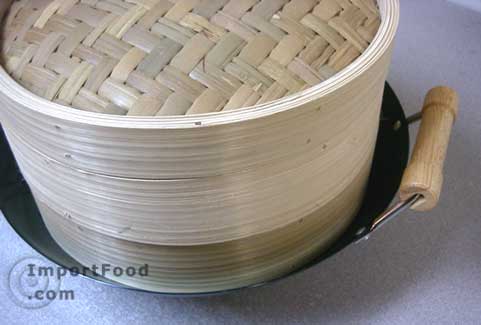
Bamboo Steamer


Ingredients:

2 cups flour
0.5 tsp. baking powder
6 eggs
1.5 cups castor sugar
3 tbs. almonds (cut into strips)

Method:

1) Put flour in a bowl and steam for 10 mins. Remove and spread on a piece of paper to cool.

2) Mix baking powder with flour and sift twice.

3) Beat eggs for 30 mins, adding sugar gradually.

4) Fold in flour and mix well.

5) Grease and line a round baking tin with greaseproof paper, cut larger than the bottom of tin.

6) Pour mixture into the tin and steam covered for 10 mins. Remove cover and sprinkle top with almonds. Cover again and steam for another 10-20mins.

7) Remove cake from tin. Cut into neat slices and serve hot or cold.

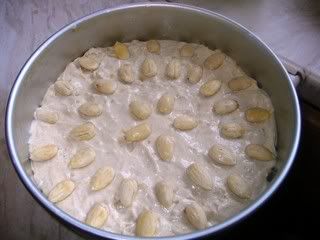
Almond Cake Batter


Steamed Almond Cake

Thursday, September 25, 2008

Ramadan Iftar Recipes | Tasty Food From Saudi Arabia

Saudia Arabia is the birthplace of Prophet Muhammad. The King of Saudi Arabia acts as the Custodian of the Two Holy Mosques. As such, Saudi Arabia tries to fulfill its responsibility of defending Islam and striving to serve Muslim interests. It also has been conducting dialogues with other cultures and religions with the aim of driving deep the principles of peace, justice and universal human welfare.

In Ramadan, adult Muslims, except the sick and those traveling, abstain from food, drink, smoking and sex between dawn and sunset. After breaking their fast, Muslims attend Tarawih, a special nightly prayers. Muslims are also encouraged to read the Quran and engage in spiritual remembrances.

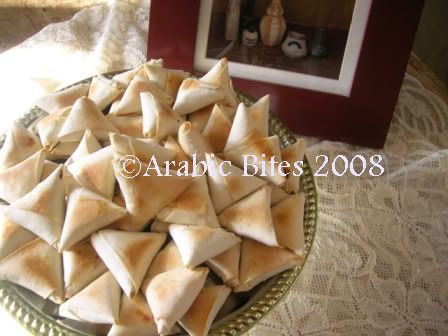
Today, we feature a Ramadan iftar dessert recipe from Saudi Arabia called Sambosa Helwa (Mini Sweet Sambosa). It is somewhat similar to the savoury Indian samosas that is filled with meat or vegetables, but in the Saudi Arabian version it is sweet. There is also a Saudi Arabian savoury version that is deep-fried.


Sambosa Helwa (Mini Sweet Sambosa) Recipe


Recipe By Arabic Bites.


Ingredients:

1 package mini sambosa pastry leaves.

For the filling:
1 cup of finely chopped pistachios.
1/2 cup sugar.
1/2 teaspoon ground cardamom.
2 to 4 tablespoons rose water.
1/8 teaspoon blossom water.
Pinch of saffron threads (crushed).

Method:

1) To seal the dough, mix 2 tablespoon of flour with water to make a sticky paste.

2) Mix all of the filling ingredients.

3) Place the pastry in your hand, take the left edge and fold it to the right side, next fold it to the left side to get a cone shape.

4) Fill cone with half a teaspoon of filling, seal the cone by repeating the same moves (left and right) close the edge with the sealing dough.

5) Bake at 350 F until golden brown.

Tuesday, September 23, 2008

Ramadan Iftar Recipes | Tasty Food From India

Haleem Recipe

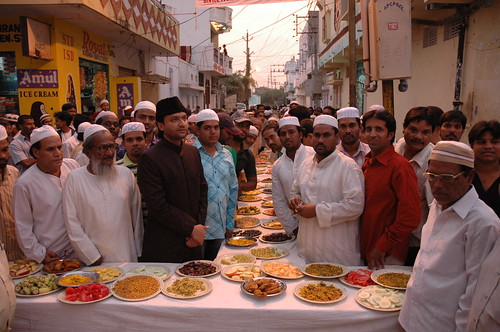
In India, as in most Muslim communities, iftar during Ramadan is often done as a community, with Muslims gathering to break their fast together. Traditionally, a date is the first thing to be consumed during Iftar when the fast is broken. This is in keeping with the Prophet's Sunnah (that is, the way of the prophet).

One of the more popular iftar dishes in India is the haleem, a type of thick stew made from pounded wheat and mutton (or beef). The Haleem is said to have originated from Hydrebad in South India. The main ingredients include mutton, cracked wheat, lentils, ginger & garlic paste, turmeric and spices. It is served hot with ghee based gravy put on top, lime pieces, coriander and fried onions as garnish. It is somewhat similar to the Moroccan harira that was featured here recently, but the haleem has a lot more spices.

The haleem is traditionally slow cooked for at least 10 hours in a cauldron and two men, usually, hit with large wooden sticks all through out the preparation, until it gets to a sticky-smooth consistency, similar to mashed mince. The cooking of haleem in Hyderabad is mastered to an art form.

But here is a haleem recipe that you can do right in your own kitchen, in 2 hours, without need for cauldrons or beefy men. Phew!

Haleem Recipe


Ingredients:


2 lbs Boneless pieces of Lamb
3 cups Cracked wheat
4tbsp Ginger-Garlic paste
1 cup Mixed lentils [urad daal,chana daal]
1tbsp Red Chilli powder
1/2 tsp Turmeric powder
1 n 1/2 cup Yougurt
1 cup Golden n Crisp fried onions [ the readymade brands available in the market can be used,if you want to save time]
1/2 cup Cashew nuts
1 tsp Garam Masala powder[1 tsp shahi zeera,2-3 cardamom,2-3 cloves and 1" cinnamon stick...blend into a fine powder]
1/2 tsp Black Pepper corns
Whole spices- 1" cinnamon stick, 2-3 cloves,2-3 cardamom
1/2 cup Ghee
Fresh Herbs- 1 cup fresh coriander, 1/4 cup fresh mint and 5-6 green chillies
Salt to taste
1/2 cup oil.

Method:

1) First wash and soak the cracked wheat for atleast 1/2 hour.Then wash and clean the lamb thoroughly,trimming off any excess fat.

2) Mix the lamb with 1 tbsp of Ginger-Garlic paste, 1/ tsp of salt, red chilli powder,1/2 tsp garam masala powder and 1/4 tsp tumeric.

3) Pressure cook the lamb on high for 8-10 min and then simmer for another 15-20 min. After it cools down, shred the meat and keep aside.

4) Boil the cracked wheat along with the mixed lentils,1tbsp ginger-garlic paste, 1/ tsp turmeric powder, 3-4 green chillies, 1/2 tsp black pepper corns in 8-10 cups
of water until its cooked completely and the water is almost absorbed by the wheat.

5) Put this wheat in a blender and pulse for a few seconds. Remove and keep aside.

6) Heat the oil in another container, add the whole spices, the cooked shredded lamb, remaining green chillies, 1/2 cup fresh coriander and saute for a 2-3 min.

7) Add the yoghurt and saute for another 10- 15 min.

8) Add 3 cups of water and bring it to a boil.

9) Add the cooked wheat and mix well, add a little bit of ghee at a time. Add salt if needed.

10) Simmer for at least 1/2 hour, stir regularly.

Motes: You can substitute the ghee with butter, or use olive oil (as a healthier option).

Monday, September 22, 2008

Ramadan Iftar Recipes | Tasty Food from Morocco

Today we feature some tasty dishes from Morocco that are often served for iftar (breaking of the Muslim fast). One staple food item that almost every Moroccan family has for break fast, is the hearty meat and lentil soup called the Harira.

Cooking this dish is not an easy task because the cooking time is long - at least between 2 andn 2.5 hours. So attempt this dish only when you have the time to do so. Otherwise, it'll be an effort wasted!

Moroccan cuisine is rich in spices. Spices in Moroccan cuisine are used to enhance, not mask, the flavor of food; if you attempt the following recipe, you will see what I mean.

The Harira Recipe
A Moroccan Soup Served at Sundown to Break the Ramadan Fast


Ingredients:

1/3 cup Flour
1/2 cup Chick peas
1/2 lb Lean lamb or beef diced
2 Large onions, chopped
1/4 ts Saffron
2 tb Paprika
1 Soup bones
1 tb Butter
2 tb Salt
1/2 ts Pepper
1/2 cup Dried broad beans
1 1/2 lb Tomatoes
1 Bunch parsley
1 Bunch fresh coriander
1 tb Butter
1/3 cup Rice
1 Lemon
1/2 cup Lentils

Method:

1) Soak overnight 1/3 cup flour in 1 cup water; 1/2 c lentils in water to cover. Brown in lightly oil deep pan lamb, onions, saffron and paprika (increase or decrease according to taste).

2) Add 6 cups of water, soup bones, butter, salt, pepper, chick peas with skins popped off and discarded, and the dried broad beans which have been washed and cleaned. Simmer, covered, for 2 hours or more.

3) 20 mins before serving, pour through a food blender into the soup pan (or blend with one cup of water) the tomatoes, parsley, coriander & the flour and water paste. Add 3 cups of water, and when it returns to boil, add the vermicelli.

4) When the vermicelli is cooked, add 1 Tb butter and lemon juice (or serve a wedge of lemon with each bowl to be squeezed on the soup). The soup should be smooth and slightly thick in consistency; add water or flour to thicken and adjust, if needed.

*Note: Chick peas may be substituted for lentils; the meat used can be chicken, if preferred.

And to sweeten your taste buds, after the hearty soup, you have the....

Famous Moroccan Dessert, Chabakia


Enjoy Ramadan Tastes from Morocco!

Sunday, September 14, 2008

Ramadan Rice Porridge Recipe


In Singapore, most mosques cook and distribute rice porridge during the month of Ramadan. This porridge is given out to Muslims after Asr' (mid-afternoon) prayers. Typically, Muslims who can afford it, give money to the mosque committtee so that they can sponspor the porridge distribution.

Most Muslim families break their fast by eating the porridge first.


Rice Porridge


Rice Porridge Recipe

Ingredients :

200g Uncooked Rice
2.5L Water
150g Lean Meat(beef and chicken), Minced
4cm Cinnamon
1 Whole Star Anise
4 Cloves Garlic
3cm Fresh Ginger
10 Pieces Blackpeppercorns
10ml Coconut Milk (optional)
1 carrot, Minced
4 tbsp Deep-fried Shallots
4 tbsp Spring onions, Chopped Moderately
Salt to Taste

Method :

1)Wash rice in several changes of water, drain and put in a large pan, add water and bring to a boil.

2)Add cinnamon, star anise, garlic, ginger and the meat.

3)Partially cover with a lid and simmer gently, stirring constantly for about 1 hour or until rice is very soft and creamy. If the porridge appears to dry out, add a little hot water.

4)When rice is soft, remove cinnamon, star anise and ginger, then add chicken and simmer for another 15 minutes.

5)Add the coconut milk here if desired (optional) and season to taste with salt.

6)Serve hot, garnished with fried shallots and spring onions.

If you prefer a vegetarian rice porridge, then simply leave out the meat, and add baby corn, peas and other vegetables you would prefer.

Saturday, September 6, 2008

Ramadan 2008 Day 6 - What I had for Iftar

Ramadan Iftar Pictures: What Are We All Eating?

I thought it would be a good idea to post pictures of what we are having for Iftar.

This picture below is from a family in Singapore. They had light chicken rolls and sandwiches for Iftar on Saturday (Day 6 of Ramadan 2008). According to them, they prefer to have something simple and light, so that it is easily digested.


This picture below is from Jordan featuring a popular fried food from the Middle East called Qatayyif, which is dough stuffed with cheese, and topped with a hot simple syrup.


The recipe for making Qatayyif is simple - usually store-bought flat pancakes are bought, then cheese, or other fillings are placed into the center of the pancakes. Then they are folded over and deep fried. The fried Qatayyif is served with hot sweet syrup.

Please email us at ramadanblog[at]gmail.com to send us your iftar pictures, ramadan recipes, articles or Ramadan reflections.

We will welcome your contributions!